Creating your wedding seating plan: how to avoid family drama at the table
How to build a seating plan that makes everyone happy, with a clear method and tips for tricky constellations.

One thing stalls almost every wedding plan for a moment: the seating. Aunt Frida and Uncle Henry haven’t spoken in years. Your partner’s parents are divorced and each bring a new partner. And the old school clique fell out last year but everyone wanted to come.
Take a breath. It’s doable, with a clear method.
Do you even need a seating plan?
For smaller celebrations (up to 25 guests) you can often skip a fixed plan. At 30 people it gets chaotic if no one knows where to sit, families get split, single guests can’t find a place, the last table suddenly has two people.
From 30 guests: yes, make a seating plan. Your guests will thank you.
When to start?
Here’s the key practical tip: don’t start too early. A seating plan you finalise three months out, you’ll rearrange three more times. Cancellations come late, new guests are added, couples split.
The ideal timeline:
- 3 to 4 months out: set tables and seating concept (how many tables, what shape?)
- 6 to 8 weeks out: rough first concept, who sits at which table?
- 2 to 4 weeks out: final plan with actual seats
- 1 week out: print place cards
Important: don’t tell anyone about the seating beforehand. Not even your own family. The moment someone knows, extra wishes appear, and you end up rearranging.
The method: paper beats spreadsheets
Sounds old-fashioned, works better than any digital solution in the first phase: write every guest on a small piece of paper or sticky note and arrange them on the kitchen table.
Step 1: one name per note
Sounds trivial, it’s decisive. If you use a list and strike through names, you lose the overview. One note per guest, done.
Step 2: group guests
Build logical groups, for example:
- Bride’s family
- Groom’s family
- Witnesses with partners
- Closest friends
- Sports clique
- Work colleagues
- Families with young children
Step 3: write down no-go constellations
Now the most important step, a separate list of:
- Divorced couples who shouldn’t sit together
- Relatives in conflict
- Anyone who for other reasons shouldn’t end up side by side
Keep this list aside and double-check against it at the end.
Step 4: decide on the couple’s table
Usually on it: the couple, both sets of parents, the witnesses. At modern weddings many couples sit only with the witnesses, parents get a “parents’ table” next to them. Either works.
Tip: agree the couple’s-table concept beforehand with parents and witnesses. That avoids disappointed faces on the day.
Step 5: build the remaining tables
Now work group by group. Bride’s family at tables 1 and 2 (depending on size), groom’s at 3 and 4. Friends at 5 and 6. You end up with logical clusters.
Within tables:
- Don’t only mix same ages, generational mix often works great
- Every table needs at least one extrovert to pull quieter guests into conversation
- Families with young kids at a table near the entrance (short route out)
- Older guests away from the dance floor and speakers
Table shapes: what fits your wedding?
Long table (U- or T-shape): great for up to 50 guests. Festive, everyone can see each other. Downside: hard to talk to someone across.
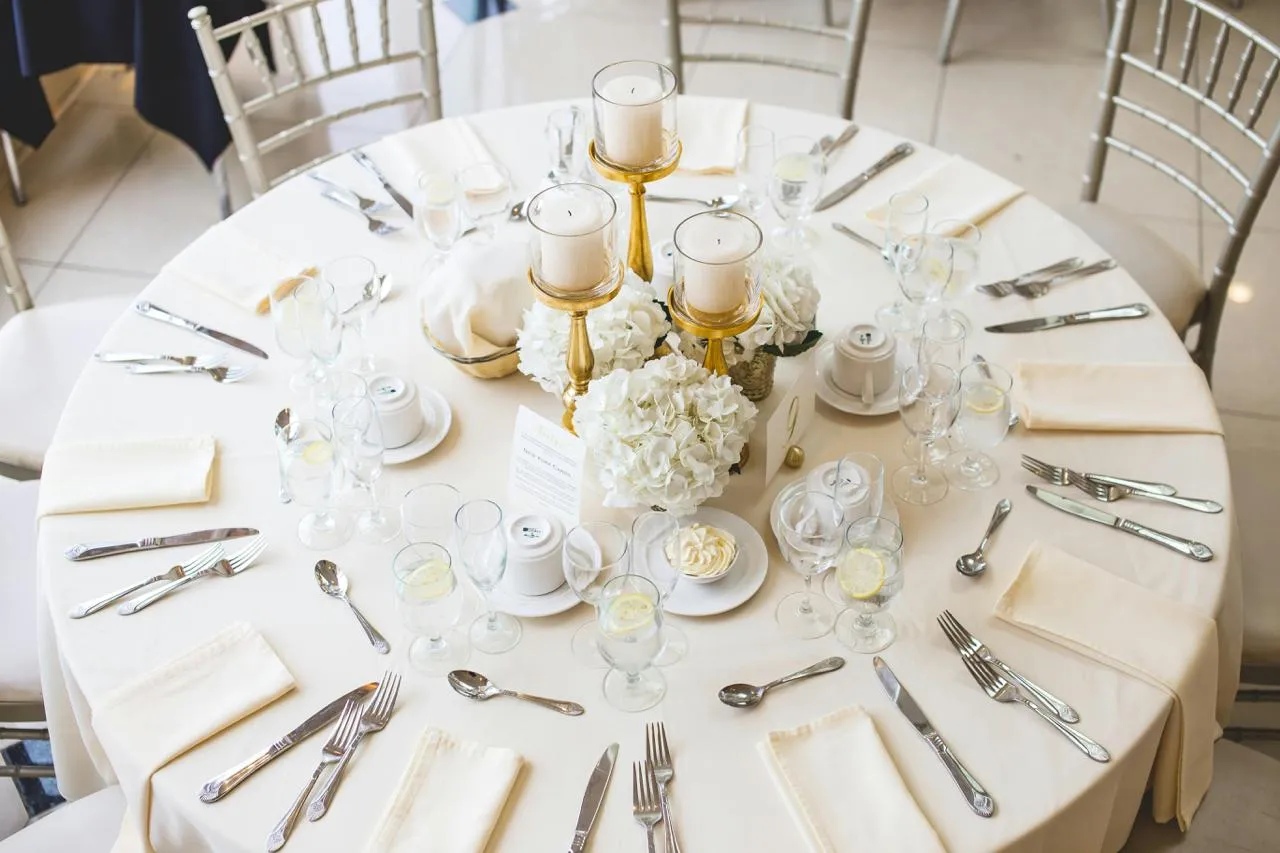
Round tables (8 to 10 per table): classic for medium to large weddings. Each table becomes its own unit. Conversations start more easily. Downside: not all guests see the couple equally.
Long banquet tables in rows: modern, festival-style. Good for relaxed celebrations. Downside: limited sightlines.
Combination: couple at a small table, guests at round tables around. Often works best if the room has space.
Solving tricky constellations
Divorced parents
Don’t seat them next to each other, but don’t put them in opposite corners either. Ideal: same or adjacent tables, each with their new partner, separated by a “buffer person”, an uncle, aunt, mutual friend. Ask both parents beforehand what’s okay.
Singles
They often feel best at a table with other singles or with a group of friends they know, not at a couple-heavy table. Avoid “leftover tables” where you dump everyone who didn’t fit elsewhere.
Ex-partners among guests
It happens, especially when the friend circle stays shared. Same area, different tables. No forced meeting, but no exclusion energy either.
Feuding relatives
Physical separation is usually best. One table between is usually enough. Those who don’t want to see each other won’t, but they also can’t avoid neighbours at the same table.
Children
Small kids stay with their parents (safer and calmer). Older kids from age 8 often enjoy a “kids’ table”, with drawing supplies, small gifts, perhaps a babysitter.
Place cards or seating chart?
Both have pros, both work:
Seating chart at the entrance: a large board with all names and table numbers. Practical for big weddings, everyone finds their table, picks their seat themselves.
Place cards at seats: small cards with names directly at the seat. More personal, more work. Lets you decide exactly who sits next to whom within a table.
Combination: seating chart at the entrance shows the table, place cards at the seat show the exact spot. Maximum effort, maximum control.
What Marrily takes off your plate
Seating plans get rearranged five to eight times before they’re final. In Marrily the plan is digital and drag-and-drop, you can move tables, swap guests and try constellations without redrawing from scratch.
Miri knows your guest list with allergies, relationships and notes. If you seat two guests together whom you flagged as “no go”, you get a small warning. And when you’re ready to share, there’s a printable plan or a share link for the venue.