Finding a wedding photographer: what really matters
Which styles exist, what a wedding photographer costs in Germany, and how to find the right one for your wedding.

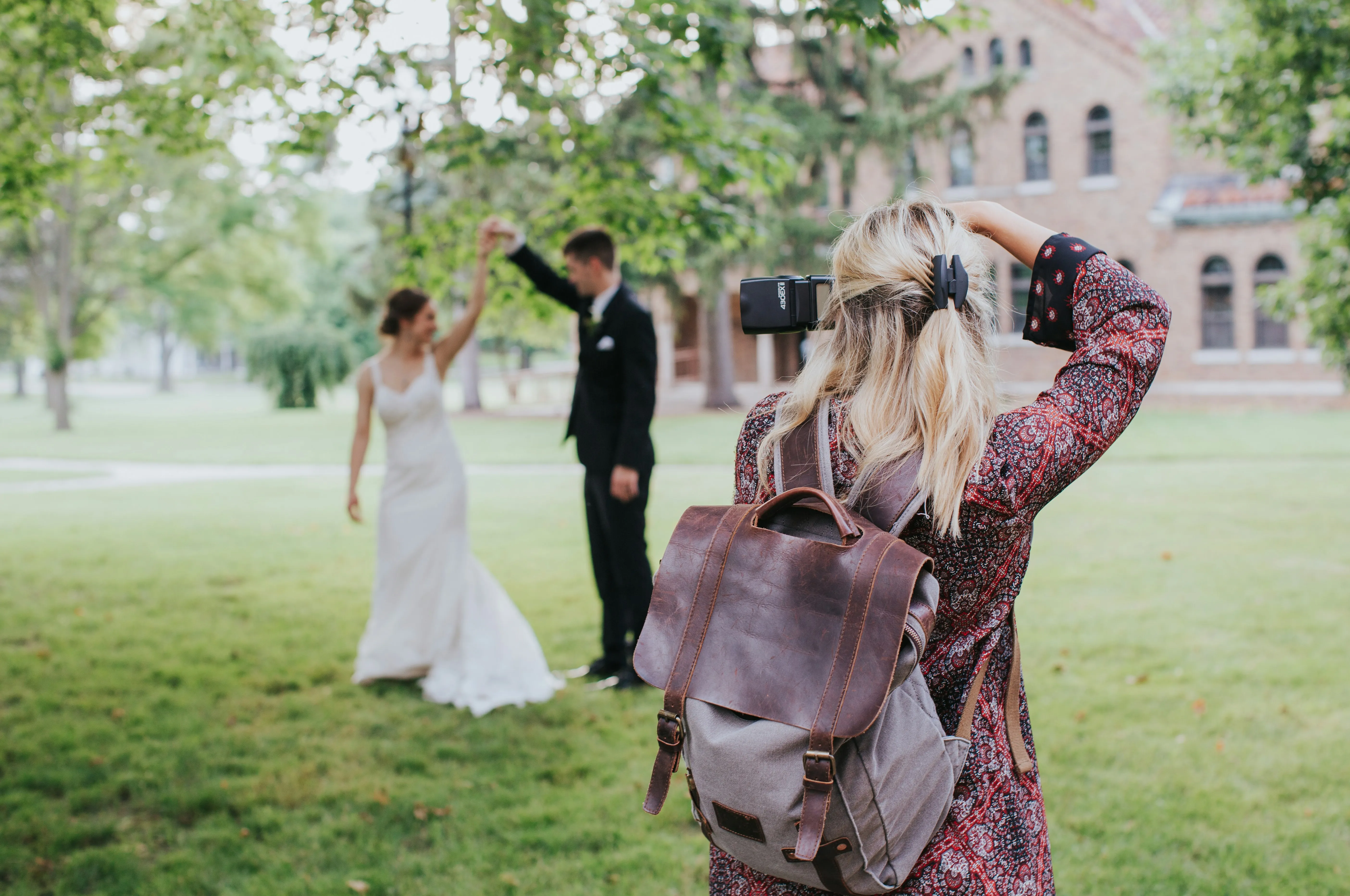
Your wedding lasts a day. The photos stay forever. That’s exactly why choosing a photographer is one of the most important planning decisions, and at the same time the one where many couples end up disappointed, because they made compromises in the wrong places along the way.
Here’s what actually matters.
Style first, price second
The most common photographer-search mistake: filter by price first. That often goes wrong. A cheap photographer whose style you don’t love costs you little money, but leaves you with photos you don’t want to hang up.
Flip it: find the style that fits you first. Then see what you’re willing to spend for it.
The key styles
Documentary / reportage: the photographer stays in the background and captures moments as they happen. Little posing, lots of emotion. Images tell the day as it was. Very popular in 2026, great for couples who value real reactions over perfect poses.
Classic / traditional: more posed scenes, formal group photos, clean composition. Images feel timeless and elegant. Good for couples who care about perfect portraits.
Contemporary / fine art: a blend of documentary and posed, with a focus on aesthetics. Bright colours, often natural light, romantic look. Popular on Instagram.
Editorial / fashion: highly stylised images, almost magazine-like. The photographer stages more, the couple also models. Polarising, some love it, others find it unnatural.
Vintage / analogue: some photographers partly shoot film. Their images have a grain and colour that’s hard to replicate digitally.
Look around Instagram, Pinterest and wedding blogs, and remember whole reportages, not single images. What do you like across several hours?
What does a wedding photographer cost in Germany in 2026?
The range is huge. Realistic numbers:
| Coverage | Price range |
|---|---|
| Registry office, ~2 hours | €400 – €1,200 |
| Half day, ~4–5 hours | €900 – €1,800 |
| Full day, 8 hours | €1,500 – €3,000 |
| Full day incl. getting ready to party, 10–12 hours | €2,500 – €4,500 |
| Top photographer in Munich/Berlin/Hamburg, 12 hours | €4,000 – €7,000 |
The market average for an 8-hour shoot in Germany is around €2,000 to €2,500. More in big cities and with highly experienced photographers, less in rural regions.
What’s usually included:
- Pre-call (often free)
- Coverage on the wedding day
- Editing of all usable shots
- Online gallery for download
- Images at full resolution
What’s often not included:
- Print products (albums, framed prints)
- Travel beyond a certain distance
- Extra hours if the wedding runs long
- Second shooter
- Engagement shoot before the wedding
How many hours of coverage do you need?
Rule of thumb: plan slightly more rather than too little. Letting the photographer go after 6 hours and missing the party photos is a classic regret.
Registry only: 2 to 3 hours, from shortly before the ceremony to the reception drinks.
Registry + small celebration: 4 to 6 hours, up to the first dance.
Full wedding: 8 to 10 hours, to cover getting ready through the start of the party.
Full reportage incl. party: 10 to 12 hours, if you want the party vibe in photos.
Planning heuristic: photographer starts 2 to 3 hours before the ceremony (getting ready) and ends after cake-cutting or the first dance. The wild party photos past midnight are usually done by guests on their phones.
What to look for in a portfolio
Don’t be dazzled by individual great shots. Look at full wedding reportages, every photo from one day. That shows:
- Is the quality consistent or are there strong swings?
- How are the images in hard light (dark church, noon sun, disco light in the evening)?
- Are skin tones natural or do they look yellow/orange/pale?
- Are guests and details captured well or is it all about the couple?
- Do emotions come through or do all shots look the same?
Ask shortlisted photographers for two or three complete reportages. Whoever refuses often has something to hide.
Key questions before booking
A good pre-call clarifies more than any portfolio. Ask these:
- How many weddings have you shot per year? (Experience)
- How many edited images do we get? (Realistic: 50–100 per hour)
- What’s the delivery time? (Usual: 4–8 weeks)
- Do you have a backup plan if you get sick? (Important!)
- What’s included in the price, and what isn’t?
- How long are the images stored online?
- Do we get usage rights for private purposes?
- Can we edit or filter the images? (Some photographers forbid this)
- What happens if the wedding runs long?
- How do you handle group photos? (Often the least popular task for photographers)
Rapport matters more than you’d think
Your photographer is near you for 8 to 12 hours, in the hotel room during getting ready, at the registry office, during the couple shoot. You spend more time with them than with most guests.
If in the pre-call you feel “I’m not comfortable here”, walk away. Even if the images look beautiful. Photos only become emotional when you’re relaxed in the moment.
When to book?
Good photographers are often booked 9 to 18 months in advance, especially Saturdays in peak season (May–September). If you know the style and price, enquire quickly.
Realistic timeline:
- 12+ months before: research, settle the style
- 9–12 months before: enquiries, pre-calls, comparisons
- 8–10 months before: book
- 3–4 weeks before: detail call (schedule, group photos, wishes)
What Marrily takes off your plate
Photographer hunting is research work, comparing portfolios, writing enquiries, coordinating calls. Marrily structures it: in the vendors area you add a “photographer” category, collect favourites, add notes on each style and compare offers side by side.
In Premium, Miri even handles the first emails: you enter your key facts once (date, location, hours, style), Miri writes the enquiries and sends them to your favourites. Replies land right in your Marrily inbox.