DJ or band for your wedding? The honest comparison
DJ or live band for the wedding reception? Pros and cons, costs and how to make the right call for your celebration.

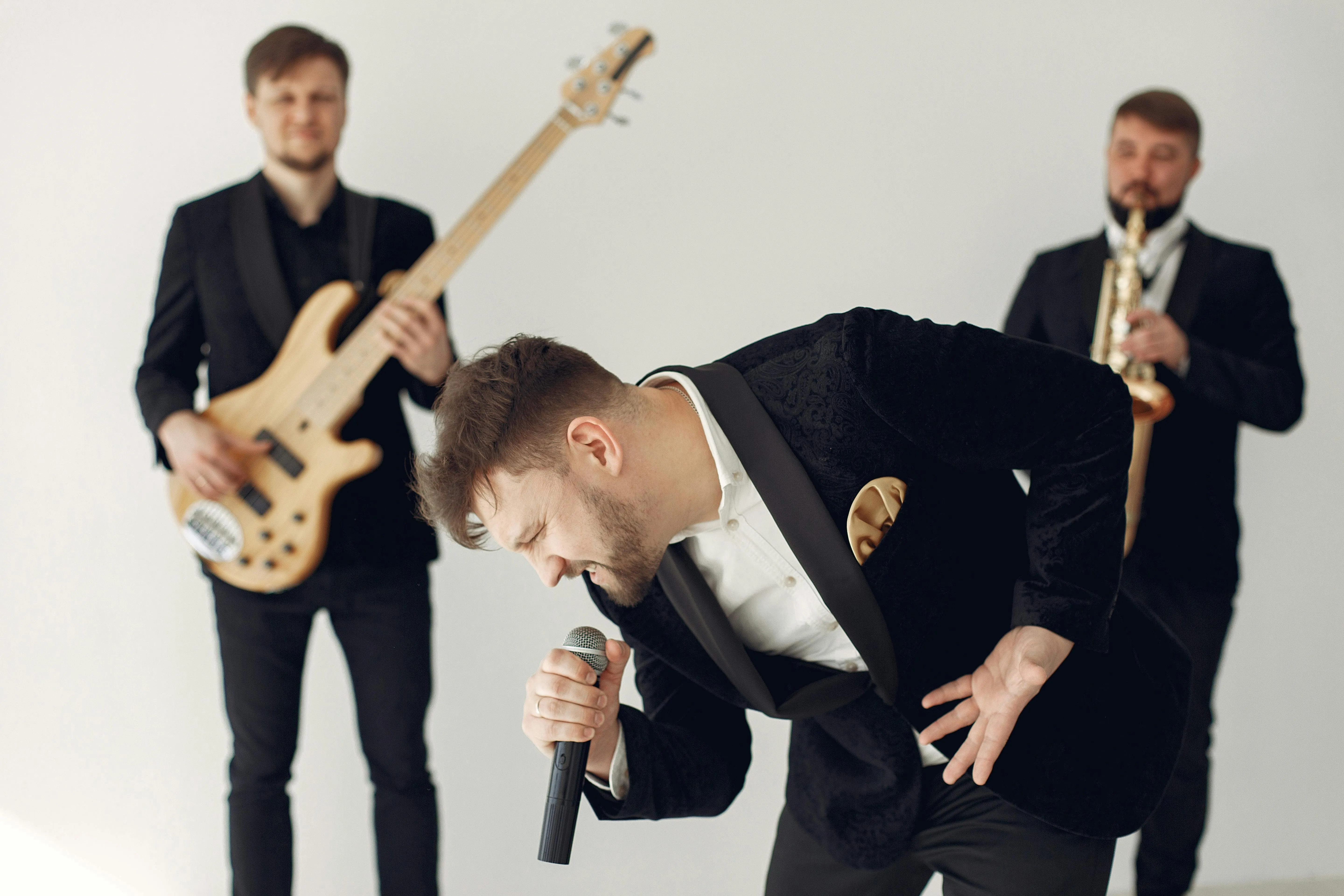
One of the most-argued questions in wedding planning: DJ or band? Both sides have passionate fans and both are perfectly fine. Which choice is right depends entirely on your wedding, not on a trend.
Here’s the honest comparison, without bias.
The short answer
- DJ: more flexible, cheaper, bigger repertoire, less space required
- Band: more emotional, more atmospheric, delivers a unique live experience, more expensive and less flexible
If you read only one line: a band delivers live atmosphere, a DJ delivers maximum dance energy.
What does what cost?
Realistic German market prices for 2026:
| Option | Price range |
|---|---|
| DJ, 5–6 hours | €800 – €1,500 |
| Established DJ, 6–8 hours incl. equipment | €1,500 – €2,500 |
| Top DJ in a big city with premium rig | €2,500 – €4,000 |
| Small band (trio, ~3 sets) | €1,800 – €3,000 |
| Mid-size band (4–6 musicians) | €2,500 – €4,500 |
| Large band (7+ musicians) | €4,500 – €8,000 |
| Show band with singer and stage | €6,000 – €12,000 |
A band is almost always more expensive than a DJ, often by a factor of 2 to 3. In return you get a whole performance, not just music from speakers.
The advantages of a wedding DJ
Huge repertoire: a DJ often has thousands of songs in their library. Spontaneous requests from guests aren’t a problem, whether 80s pop, Turkish pop, or the groom’s favourite indie band. What guests wish for is usually played within seconds.
No breaks: a DJ doesn’t need breaks. That means the dance floor is alive from start to end. A band typically has 45–60 minute breaks between sets, often with canned music, without the live energy.
Flexible style: a DJ can shift seamlessly from reception (easy lounge) to dinner (soft background) to party (full energy). A band has a style, and rarely covers this range.
Low footprint: a DJ booth, two speakers, a few lights, done. In smaller venues often the only sensible option, because a band simply doesn’t fit.
Fast setup: 60 to 90 minutes and they’re ready. A band needs 2 to 4 hours setup, factor that into venue time.
Cheaper: to keep budget for other areas, a DJ often saves €1,500 to €3,000 versus a band.
The advantages of a live band
Emotional intensity: live music lands differently. A great sax during the first dance, a singer rendering “At Last”, a trumpet opening the first waltz, it moves people in a way no DJ track does.
Visual wow: a band on stage is a show. It becomes the visual centre of the evening. In large venues with a stage it almost feels like a concert.
Interaction: a good bandleader engages guests in ways a DJ barely can, short performances, personal addresses, improvisation, pulling the couple to the front.
Personal: a band is usually chosen by style, soul, jazz, rock, funk. That makes your music the signature of your wedding. Guests remember it years later.
Status signal: a good live band is a clear message to guests: we didn’t cut corners. For some couples that matters, for others not at all.
The downsides that rarely get said aloud
With a DJ
- Personality matters enormously: a good DJ is not only tech, but also host. A boring DJ can kill the mood no matter how good the music
- Can feel “cheap”: some guests instinctively associate DJ with disco or club night, even if reality is different
- One-sided repertoire is possible: the wrong DJ plays pop mash-ups or generic charts all night
With a band
- Smaller repertoire: a band typically does 30–50 songs really well. Spontaneous requests often fall flat
- Volume is hard to dose: live music is usually louder than DJ music. For older guests or quiet conversations it can be exhausting
- The break problem: when the band takes a break, energy drops. Some bands have their own playlists, others don’t
- Song requests cost extra: if you want “our song” played by the band, they have to rehearse it. That often costs extra, or is a no
- Illness risk: if a band singer falls sick, the whole band is out. Backups are easier with DJs
The hybrid: do both
More and more couples book both: a band for 1 or 2 sets during the evening (say, first dance and a live performance at 11 pm), a DJ for the rest and the party. You get the best of both worlds, but it also costs more.
Realistic hybrid budget: €3,500 to €6,000 for DJ + small band.
Which option fits which wedding?
DJ is the right choice when:
- You have a mixed-taste audience (generations, cultures, styles)
- Your guests love to dance and you want maximum dance floor time
- Budget is tight and you’d rather invest elsewhere
- Your venue is small
- You have international guests with varied musical backgrounds
- Spontaneity matters more than atmosphere
A band is the right choice when:
- You strongly value atmosphere and live experience
- You have a clear musical style (jazz, soul, rock, funk)
- Your wedding is more elegant than wild-dancing
- Budget isn’t central
- You have a larger venue with room for stage and gear
- Your guests appreciate live music
When to book?
Both, DJ and band, are booked 9 to 12 months in advance for peak season (May to September). Top DJs and popular bands often 12 to 18 months.
Realistic timeline:
- 9–12 months before: research, listen (YouTube, recordings of real weddings)
- 8–10 months before: enquiries, comparison, booking
- 3–4 weeks before: finalise song list, request songs for DJ, set first-dance track, align break playlist
The single most important question before booking
Whether DJ or band, ask for recordings from real weddings. Not studio tracks or promo videos, but real performances from real events. That shows how they work under live conditions, not just how well they sell themselves.
What Marrily takes off your plate
Marrily helps you compare: in the vendor area you list DJ candidates and band candidates in parallel, add audio samples, notes and prices. Miri gives you a direct side-by-side, what costs what, what’s included, what isn’t.
For the first dance and the wish-song list, Marrily has its own section you can share directly with your DJ or band. No more email back-and-forth, everything in one place.